
It’s one of the questions we’re hearing most right now: which costs on a settlement statement actually qualify as normal transactional expenses in a 1031 exchange? It matters more than you might think. The wrong line item can quietly turn part of your exchange into a tax bill.
A settlement statement for a relinquished or replacement property can hold dozens of expenses. How each one is classified affects your taxable boot, your basis, and the equity you have to reinvest. Not every cost that shows up in escrow can be paid with exchange funds without tax consequences.
Here’s the part most people miss. Net cash boot is taxable to you even if your new loan is larger than your old one.
There’s no single IRS ruling that settles every expense, so the final call comes down to your facts and your tax counsel. The most useful framework comes from the American Bar Association Tax Section’s Report on Open Issues in Section 1031 Like-Kind Exchanges (July 14, 1995).
A simple way to think about it
Costs tied to the sale of the relinquished property or the acquisition of the replacement property have a stronger case as exchange expenses. Costs tied to financing, ownership, or other obligations usually get different treatment. And some depend entirely on why the cost was incurred.
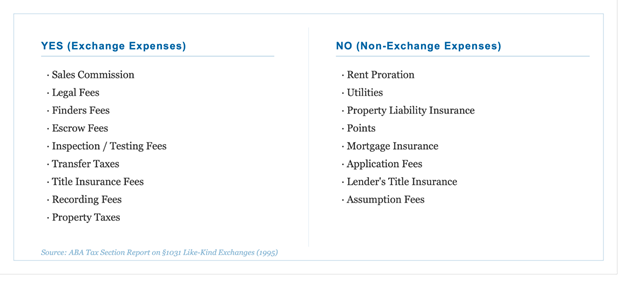
The purpose of the expense can change its treatment. A hazardous-waste or property inspection required by the lender may be a loan-acquisition cost. But if that same inspection is required under the purchase or sale contract, it may be an exchange expense.
While the tax Court in Blatt v. Commissioner (102 T.C. 77) did allow replacement property loan costs as exchange expenses, loan acquisition fees are typically considered to be a cost of obtaining a new loan, not of acquiring the property. Therefore, the same cost may qualify if considered a cost of acquisition and yet not qualify if considered a loan expense.
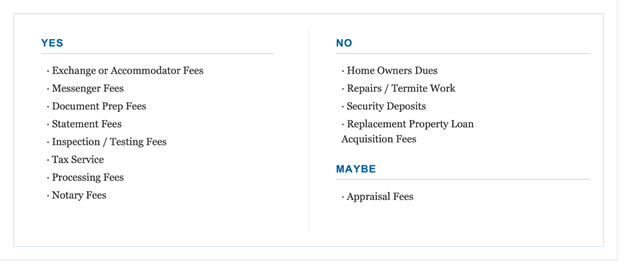
Based on the above, other costs you enounter may be treated as follows:
The takeaway
Before your 1031 exchange closes, walk over every cost on the settlement statement and know which bucket it lands in. A cost in the wrong column can shrink your reinvestment or create boot you didn’t plan for. When a charge is questionable, review it with your tax advisor before the money moves. Net cash boot is taxable to you even if your new loan is larger.
Have a closing cost you’re not sure about? Drop it in the comments. We may cover it in another article.
The Guys With All The Answers…
 David and Thomas Moore, the co-founders of Equity Advantage & IRA Advantage
Whether working through a 1031 Exchange with Equity Advantage, acquiring real estate with an IRA through IRA Advantage or listing investment property through our Post 1031 property listing site, we are here to help Investors get where they want to be. Call them today! 503-635-1031.
This information is provided for educational purposes and is not tax or legal advice. Consult your tax and legal advisors regarding your specific transaction.